 Jyranthiloryx Vyxalorithal
When you picture a casino floor, it is easy to imagine a sea of games governed by pure chance. The spinning roulette wheel, the tumbling dice, the flashing lights of a slot machine all seem to rely on a hopeful prayer to Lady Luck. Not every casino game works that way, however. Tucked among the games of pure chance is one that rewards something else entirely: strategy. That game is blackjack, and for players who love making calls that matter, it has more in common with a strategy video game than a lottery ticket.
Before we deal the cards, it helps to clarify what separates a game of chance from a game of skill. That distinction comes down to meaningful choices and their measurable impact on outcomes.
Player Choice vs Pure Chance at the Table
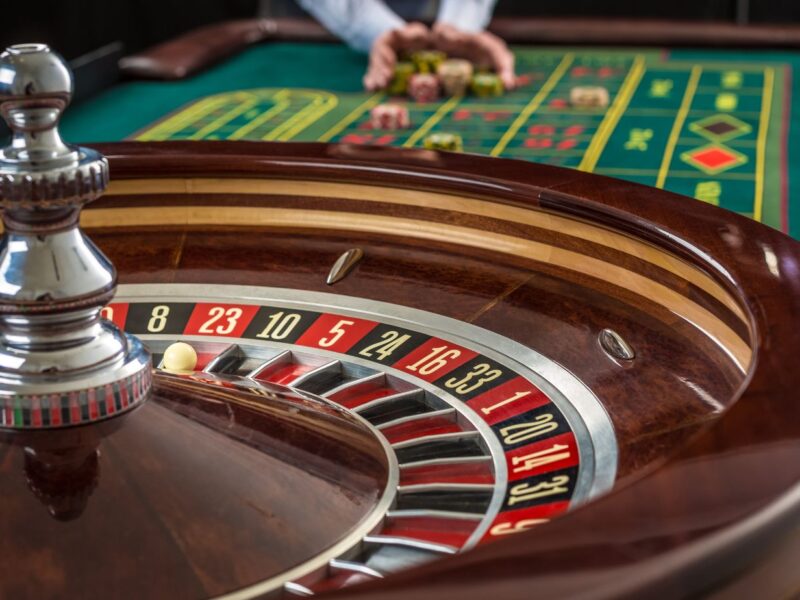
Think about a slot machine. Your only real decision is how much to bet before pulling the lever. From that point on, the outcome is determined by a random number generator, and you are along for the ride. The same is true of roulette: you place your bet, the wheel spins, and physics takes over. There is zero player agency once the action starts.
Blackjack is fundamentally different. After the initial deal, the game is entirely in your hands. You face a series of critical choices: hit and take another card, stand with what you have, double down to increase your potential winnings, or split a pair into two separate hands. Each call directly alters the course of the game. Understanding blackjack odds is central to making those calls well, because every move either narrows or widens the house edge in real, calculable terms. This constant interplay of choices is the heart of blackjack’s strategic depth and what sets it apart from pure chance-based counterparts.
Given how much weight each choice carries, how do you know which ones to make? This is where blackjack opens up a layer of strategy that will feel familiar to anyone who has ever studied a build order in a real-time strategy game or fine-tuned a character class in an RPG.
Mastering Basic Strategy Like a Gamer
Just as competitive video games have an established meta, a generally agreed-upon optimal way to play, so does blackjack. That framework is called Basic Strategy, and it is not a hunch or a gut feeling. It is a complete set of statistically proven decisions for every hand you can be dealt against every card the dealer is showing: a mathematical roadmap to making the best play every single time.
Following Basic Strategy can dramatically reduce the house edge. More advanced players can build on this foundation with card counting, a technique that involves tracking the ratio of high-to-low value cards remaining in the deck to gain an incremental edge over time. No approach eliminates variance; it only ensures that every move you make is the one that maximizes your probability of success.
That principle will resonate with any experienced strategy gamer. You cannot control every outcome in a turn-based title, but you can control the quality of each play. Blackjack runs on exactly the same logic.
How Randomness Still Shapes Each Hand
Even the most complex strategy games incorporate a degree of randomness. Think of critical hit chances in an RPG, fog of war in a real-time strategy game, or resource placement on a procedurally generated map. Designers use this randomness, often called RNG (Random Number Generation), to ensure no two sessions play out identically and to test a player’s ability to adapt under pressure. Blackjack presents that same adaptive challenge through the shuffle of the deck.
You can make the mathematically correct call to hit on a 16 against a dealer’s 10, and you may still draw a face card and bust. That is the short-term variance every strategy gamer knows. The skill in blackjack, much like in poker or any game of incomplete information, is not about guaranteeing a win on every hand. It is about consistently making the play with the highest probability of success across hundreds or thousands of hands. It is about playing the long game, a mindset any seasoned strategist can appreciate.
Why Strategy Gamers Might Enjoy Blackjack
The appeal of blackjack extends well beyond the casino floor. At its core, it is a mental puzzle built on the same foundations as many beloved strategy titles: limited information, high-stakes decisions under pressure, and a learnable meta that clearly separates beginners from experienced players. You manage your bankroll the way a strategist manages resources, carefully rationing your edge to survive inevitable downturns.
Most importantly, blackjack delivers the deep satisfaction of knowing that your result came not from a lucky spin, but from a well-executed sequence of plays. Every time you correctly double down on an 11, correctly split your eights, or correctly stand on a soft 18 against a dealer bust card, you are putting probability to work in your favor. Over time, those small advantages compound, and that cumulative edge is what transforms blackjack from a casino game into a genuine test of strategic thinking.
If you thrive on calculated risks, enjoy learning optimal plays, and find meaning in seeing your judgment pay off, blackjack offers a surprisingly deep challenge waiting to be explored.
Frequently Asked Questions
Is Blackjack really a game of skill?
Yes. While luck determines the cards you receive, your choices on how to play each hand measurably shape your probability of winning. That element of player agency is precisely what qualifies it as a skill-based game.
Can perfect strategy guarantee a win?
No strategy eliminates the randomness of the card shuffle. However, consistently applying optimal play dramatically reduces the house edge and gives you the best possible chance of winning over the long run.
How difficult is it to learn Basic Strategy?
Picking up Basic Strategy is comparable to learning the core mechanics of a new video game. The fundamentals are straightforward and can be grasped by studying a simple reference chart, often within a single session.
How does Blackjack differ from Poker as a skill game?
In blackjack, you compete against the dealer with the goal of reaching a hand value closer to 21 without going over. In poker, you compete directly against other players, introducing complex psychological elements like bluffing that play no role in blackjack.


 Simon Leonard

 Jyranthiloryx Vyxalorithal