 Phaelorith Vylandore
The guide explains name and photo sharing iphone and how it works. It shows how a user sets a shared name and photo. It shows how a user customizes a Contact Poster. It shows how a user controls privacy and fixes basic issues. The instructions assume iOS 17 or later and a device that supports Contact Posters.
Key Takeaways
- Name and photo sharing iPhone lets users share a customized Contact Poster with chosen contacts, enhancing caller and message identification.
- Users set up and personalize their shared name and photo in Settings under Contacts by enabling Name & Photo Sharing, selecting images or avatars, and editing styles.
- The feature respects privacy with options to share only with selected contacts and recipients can accept or decline shared posters for control over visibility.
- Updates to the Contact Poster sync automatically across all devices linked to the user’s Apple ID, ensuring consistent display for accepted recipients.
- Troubleshooting shared name and photo issues involves checking iOS versions, Apple ID settings for Messages and FaceTime, and managing local contacts on recipient devices.
- Privacy controls allow users to remove recipients or keep the Contact Poster private, while device restarts and iCloud Contacts toggle help resolve common glitches.
How iPhone Name & Photo Sharing Works (Quick Overview)
Apple offers a built-in feature that lets people share a name and profile image across calls and messages. Name and photo sharing iphone sends a chosen name and image to people who accept the share. The device stores the shared name and photo in the user’s Apple ID settings. When another person has the share enabled, their iPhone shows the sender’s Contact Poster during calls and in messages.
The feature uses the user’s Apple ID and Messages settings to match recipients. The sender controls who receives the shared name and photo iphone data. The recipient can accept or decline the share. If the recipient declines, their device will not update the caller display. The system syncs changes across devices that use the same Apple ID, so a user who updates the Contact Poster sees the change on all linked iPhones.
Name and photo sharing iphone works with standard phone calls, FaceTime, and SMS or iMessage threads. The feature also respects device-level privacy settings. For organizations, an admin can limit sharing via device management policies. For most users, the feature simplifies how people recognize callers and message senders without changing local contacts.
Set Up And Customize Your Shared Name, Photo, And Contact Poster
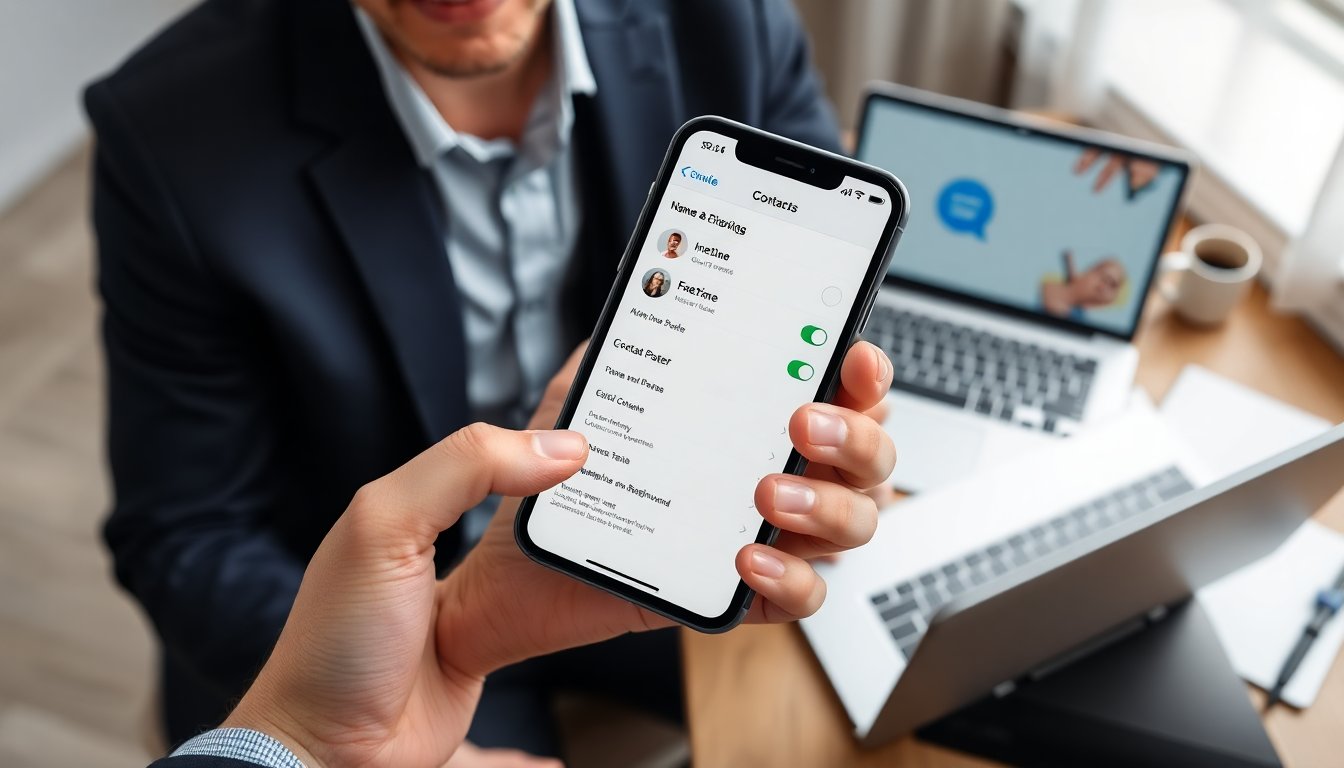
A user opens Settings and taps Contacts, then taps Name & Photo Sharing to begin. A user turns on the feature and confirms the Apple ID they want to use. The user picks a name and a photo or avatar. The user can choose a live photo, a standard image, or a stylized avatar. The user can also edit typography and background for the Contact Poster.
Apple provides guided steps to create a Contact Poster and preview it before sharing. For a full step-by-step walkthrough, an article explains how to make Contact Posters in iOS 17 and shows each screen and option. The guide helps a user choose images and enable sharing without guesswork. A user who follows the tutorial can complete setup in minutes.
After setup, the Contact Poster appears to recipients who accept the share. The user can change the poster at any time and the update propagates to accepted recipients. The shared name and photo iphone setting lives in Contacts so the user can switch between multiple posters. If a user wants tighter control, they can limit sharing to selected contacts rather than allow the feature for all messages and calls.
Step-By-Step: Change Your Shared Name, Photo, Avatar, And Poster Settings
Open Settings and tap Contacts. Tap Name & Photo Sharing. Tap Edit under the current poster to change the name. Tap Edit Photo to pick a new image or avatar. Tap Styles to change font or background. Tap Done to save the changes.
To share with selected people, open Contacts and choose Share My Info. Pick specific contacts and send the updated poster. The recipient receives a prompt and either accepts or declines. If they accept, their device updates the display for future calls and messages. If they decline, their device keeps the old contact data.
If a user wants more sharing options for lists or reminders, Apple provides sharing features across apps. A guide on sharing lists and reminders covers how to share items in the Reminders app and shows practical steps for grouped sharing. That guide helps a user manage collaborative lists and permissions on iPhone and iPad. The user can use those list-sharing workflows when they need coordinated contact or household details.
Control Privacy, Manage Recipients, And Troubleshoot Common Issues
A user can restrict name and photo sharing iphone to specific people in Settings. The user opens Name & Photo Sharing and selects Only Contacts or Choose People. The user removes a recipient at any time to stop future updates. The user can also set the poster to remain private so only the sender sees changes locally.
If the shared name or photo does not update for a recipient, the user should confirm both devices run a supported iOS version. The user should check that Messages and FaceTime have correct Apple ID entries. The user should sign out and sign back in if sync fails. If the problem persists, Apple Support and technical sites like PCWorld often publish device troubleshooting steps that can help identify software or network causes.
A user may see display mismatches if the recipient has a local contact for the sender. The recipient must remove or update the local contact to accept the shared poster. A user can also toggle iCloud Contacts to force a sync. If the feature behaves oddly after an update, restarting both devices often resolves temporary glitches. For persistent issues, consulting a detailed help article can save time and reduce confusion.


 Phaelorith Vylandore