 Phaelorith Vylandore
how to delete wallpaper on iPhone 13 is simple and fast. This guide shows clear steps for the Settings app, the Photos app, and resets. It explains when an image can return and how to stop that. The instructions apply to iOS updates current in 2026 and fit a gamer’s phone that needs quick changes.
Key Takeaways
- Deleting wallpaper on iPhone 13 is quick through the Settings app by selecting the wallpaper preview and tapping Remove.
- To fully delete a wallpaper sourced from Photos, users must remove the image directly in the Photos app or Shared Albums.
- Resetting all settings on iPhone 13 restores default wallpaper without deleting personal data, useful if wallpapers reappear after deletion.
- Disable iCloud Photos sync to prevent deleted wallpapers from automatically restoring to your device.
- Deleting apps that supply wallpaper packs and clearing related images in Photos helps remove stubborn wallpaper themes.
- Rebooting the iPhone 13 often resolves wallpaper persistence issues by clearing temporary caches.
Two-Click Method: Delete A Wallpaper From Settings
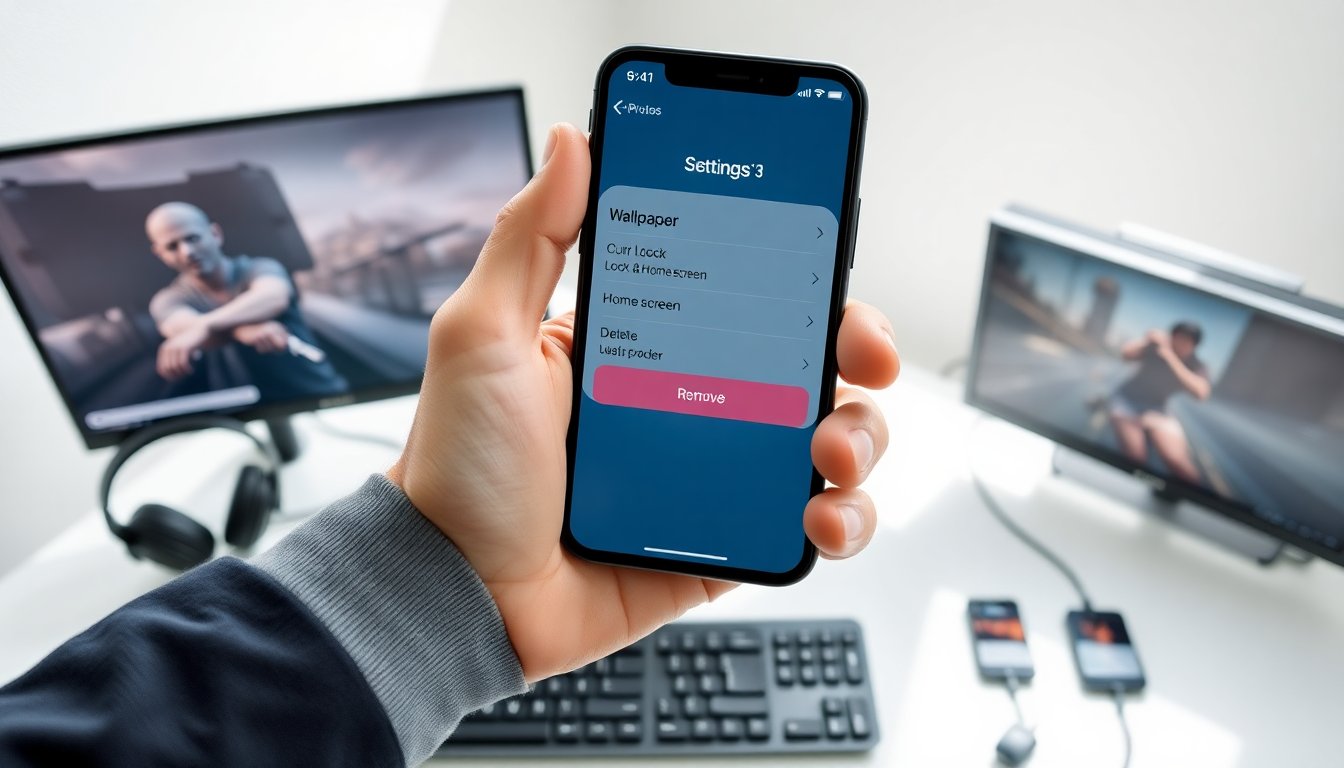
Open Settings. Tap Wallpaper. Tap the current wallpaper preview. The phone shows Lock and Home screen previews. Tap Edit if the option appears. Tap Remove to delete a wallpaper. The iPhone removes the selected image from active wallpaper slots.
If the wallpaper came from a downloaded theme, the phone might keep the file in Photos. The user must open Photos to delete the source image. The quick Settings method resets the visible background without changing Photos content.
If the user wants to switch rather than delete, Settings lets the user pick a new wallpaper. The user taps Choose a New Wallpaper and selects a still image, a live photo, or a gradient. The Settings route works on iPhone 13 models with modern iOS builds.
For users who prefer gestures, long-press on the Home or Lock screen preview and then tap Customize. The user then selects Wallpaper and picks Remove. This long-press route accomplishes the same result with two or three taps. For related tips on iPhone 13 hardware deals that might affect a phone persona, see the article about iphone 13 back market.
Remove Wallpapers From Photos, Live Photos, Or Shared Albums
Open Photos. Find the image used as wallpaper. Tap the image. Tap the trash icon. The app asks to confirm. Tap Delete Photo to remove the file.
Live Photos act like regular images for deletion. The user opens Live Photo, then taps Delete. Deleting a Live Photo stops it from appearing as a wallpaper option. If the image sits in a Shared Album, the user must remove it from that album. The user opens the album, selects the image, taps More, and then taps Remove from Album. That action removes the image from the shared set without deleting it from the owner’s library.
If the image persists as a wallpaper even after deletion from Photos, the user should check iCloud sync. iCloud can restore images to the device. The user opens Settings, taps the Apple ID, taps iCloud, then taps Photos. Turning off iCloud Photos stops automatic re-sync, but the user should back up first.
The Photos app route helps when a gamer wants to clear a themed background quickly before streaming. For guidance on removing apps that might supply wallpaper packs, the user can reference a step-by-step piece on how to delete apps in iOS from Wccftech. Also, users who need to recover deleted messages on their device can read the walkthrough for how do you find deleted messages on iphone.
Troubleshooting, Resetting To Default Wallpaper, And Preventing Restores
If a wallpaper returns after deletion, the user should reboot the iPhone. The user presses and holds the side button and a volume button, then slides to power off. Powering on clears temporary caches and can stop the image from reappearing.
To reset all wallpapers, the user opens Settings, taps General, then taps Reset or Transfer. The user taps Reset Home Screen Layout to remove custom layouts but not wallpaper. To revert wallpaper specifically, the user taps Reset All Settings. That action restores default wallpaper and preserves data. The user should note that Reset All Settings also resets network and display preferences.
If the device shows storage issues, the user should review iPhone Other storage guidance. Removing caches can affect whether deleted images return. For clear advice on managing iPhone storage and clearing the Other category, consult the guide on iPhone ‘Other’ storage.
For stubborn wallpaper packs from third-party apps, the user should delete the app and then clear any remaining images from Photos. The user can remove apps with a long press and Delete App. For methods to remove apps, refer to a practical article at PCWorld for broader device cleanup tips.
To prevent accidental restores, the user should disable automatic restores during an iCloud or device restore. The user unchecks Photos sync in the restore setup. The user also checks backup content in iCloud settings to ensure wallpaper images do not return after a restore.
If problems persist, the user contacts Apple Support. The support team can inspect backups and settings. Gamers who change backgrounds often should keep one backup and manage Photos sync carefully to avoid reintroducing removed wallpapers.


 Phaelorith Vylandore
 Undergrowth Games