 Phaelorith Vylandore
If you’re serious about fitness, meal prep, or just eating healthy, steaming broccoli is one of the most effective cooking methods available. It’s fast, reliable, and requires minimal effort, kind of like hitting a speedrun checkpoint and knowing your route is solid. Whether you’re wondering how long to steam broccoli on a stove, how to steam broccoli in a pot, or how long does broccoli take to steam, this guide covers everything you need to nail it every single time. We’ll walk through the exact equipment, step-by-step instructions, timing for different textures, and pro tips to avoid the common pitfalls that ruin broccoli. By the end, you’ll know exactly how long should you steam broccoli for crisp-tender perfection or soft, tender results, whatever your preference.
Key Takeaways
- Steaming broccoli preserves essential nutrients like vitamin C and sulforaphane better than boiling, roasting, or microwaving, making it the healthiest cooking method available.
- Cut broccoli florets to uniform sizes (1.5 to 2 inches diameter) before steaming to ensure even cooking and avoid overcooking small pieces or undercooking large ones.
- Steam broccoli for 4 to 5 minutes for crisp-tender texture, 6 to 8 minutes for fully tender results, and always check at the 3-minute mark to avoid overcooked broccoli.
- Maintain a snug-fitting lid and ½ to 1 inch of water in your pot to trap steam consistently, and avoid lifting the lid repeatedly as each lift adds about 30 seconds to cooking time.
- Properly steamed broccoli stays fresh for 3 to 5 days in the refrigerator when cooled and stored in an airtight container, or up to 3 months when frozen on a baking sheet first.
Why Steaming Broccoli Is The Healthiest Cooking Method
Steaming broccoli beats other cooking methods by a significant margin when it comes to nutrient retention. Unlike boiling, which leaches water-soluble vitamins into the pot, steaming keeps the broccoli suspended above the water, preserving heat-sensitive nutrients like vitamin C and sulforaphane, a compound linked to anti-inflammatory and detox benefits.
The science is straightforward: steaming uses moist heat that cooks the vegetable gently without prolonged contact with water. Roasting introduces oils and higher temperatures that can degrade certain nutrients, while microwaving (though faster) applies intense heat that can break down delicate compounds. Steaming sits right in the sweet spot, hot enough to cook the broccoli quickly, gentle enough to keep the good stuff intact.
You’ll also notice a texture difference immediately. Steamed broccoli maintains a firmer bite and brighter green color because the heat doesn’t break down chlorophyll as aggressively as other methods. The florets stay intact and don’t get waterlogged. From a practical standpoint, this method is also forgiving: if you’re new to cooking broccoli, steaming gives you a wider window of doneness before things go sideways. There’s less room for catastrophic failure compared to pan-frying or roasting.
Essential Equipment And Tools You’ll Need
You don’t need fancy gear to steam broccoli effectively. The basics are simple: a pot, water, and something to hold the broccoli above the water line. Let’s break down your options so you can choose what works for your kitchen.
Steamer Basket Options
Your steamer basket is the key piece. The most common option is a collapsible metal steamer basket, cheap, durable, and works with any pot size. These fold up or down to fit various pot diameters, typically ranging from 5 to 11 inches. They have a center post that locks into place, keeping the basket elevated above the water.
Bamboo steamers are another solid choice, especially if you’re prepping multiple batches. They stack, look nice, and distribute heat evenly. The tradeoff is they take up more storage space and need careful cleaning to avoid mold. Silicone steamer baskets are newer entries, flexible, nonstick-friendly, and compact. They work fine for smaller portions but aren’t as durable long-term as metal.
If you don’t own a dedicated steamer basket, you can jury-rig one: place a metal colander over a pot of boiling water (make sure it doesn’t touch the water), or rest chopsticks or aluminum foil balls at the pot bottom and balance a plate on top. These work, but they’re less stable than a proper basket.
Pot And Water Setup
Use a pot deep enough that water won’t touch the broccoli florets as it simmers. A 2 to 3-quart pot is standard and works for most home cooking. Stainless steel or aluminum pots heat evenly, so you’ll get consistent results. Avoid reactive metals like cast iron without seasoning, as they can discolor the broccoli.
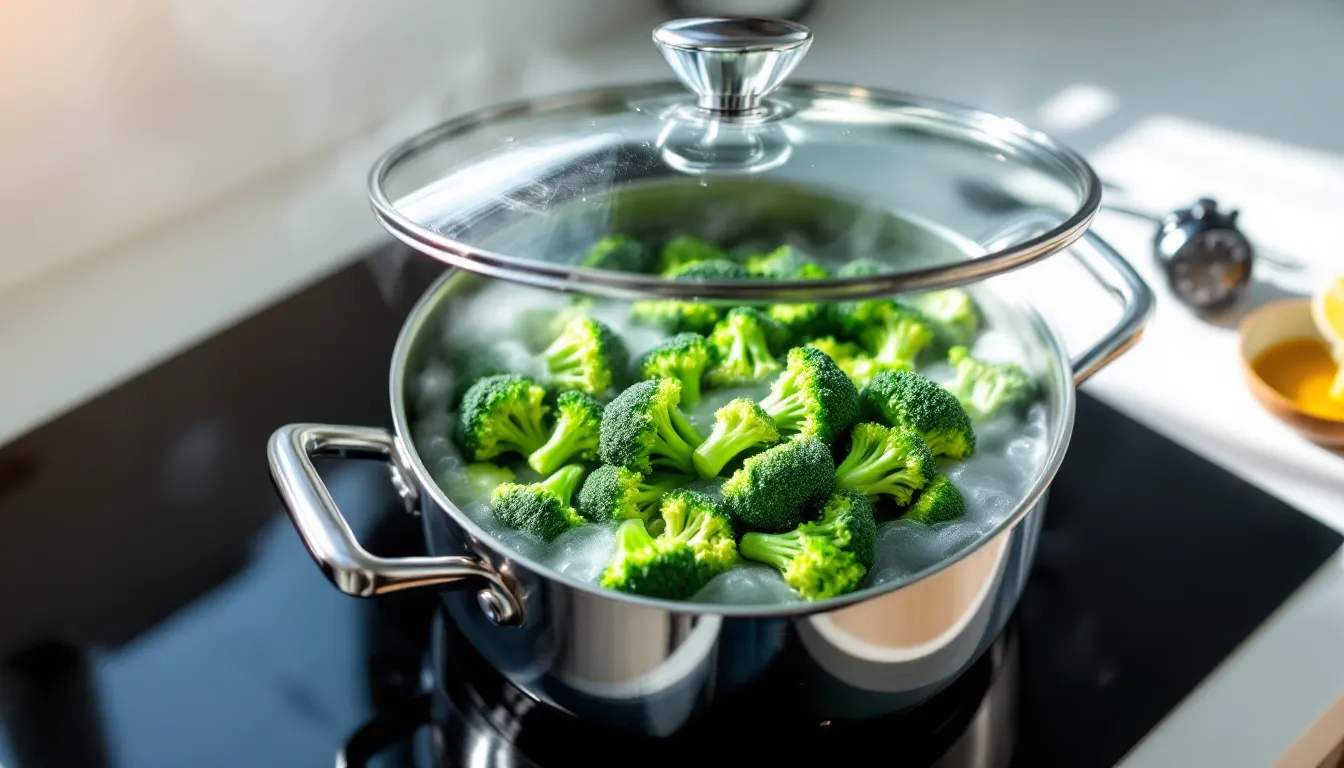
Fill the pot with about ½ to 1 inch of water, just enough to create steam without boiling over or drying out. Too little water and your steamer will dry out: too much and you risk water splashing up and wetting the broccoli. A lid is essential. A transparent glass lid lets you check progress without lifting it repeatedly, but any snug-fitting lid works. The lid traps steam and ensures even cooking throughout.
Step-By-Step Instructions For Steaming Broccoli
Follow this sequence to nail the process every time. It sounds detailed, but once you’ve done it twice, it becomes automatic.
Preparation And Cleaning
Rinse your broccoli under cold running water to remove dirt and debris. Use your fingers or a soft brush to gently scrub between the florets, where grit hides. Pat it dry with a clean kitchen towel or paper towels. Excess water on the surface isn’t a deal-breaker, but it can extend cooking time slightly.
Inspect the head for yellowing, dark spots, or soft areas. Fresh broccoli should be deep green with a tight, compact head. Slightly loose or purplish florets are fine, that’s natural variation. If the stem is hollow or mushy, toss it.
Cutting And Sizing
This step directly impacts how long it takes to steam broccoli. Uniform floret size ensures even cooking. Cut your broccoli head lengthwise down the center, separating the main florets from the stem. Then, cut the stem into manageable pieces (about ½-inch thick rounds work well).
Aim for florets roughly 1.5 to 2 inches in diameter at the crown. Smaller florets cook faster (3–4 minutes), while larger ones take 6–8 minutes. If you’re mixing sizes, group similar sizes together or cut larger ones smaller for even heat distribution.
Don’t discard the stem, it’s tender and delicious once you peel off the thick, fibrous outer layer. Slice it into rounds or sticks to cook alongside the florets.
Setting Up Your Steamer
Fill your pot with ½ to 1 inch of water and bring it to a boil over high heat. Insert your steamer basket once steam begins rising consistently. Let it sit for 30 seconds so the basket acclimates to the heat and the steam pressure stabilizes.
Arrange broccoli florets stem-down in a single layer. They don’t have to be perfectly neat, but avoid stacking them directly on top of each other. If you have a large batch, it’s better to do two rounds than to cram them in and create hot spots or uneven cooking.
Cover the pot with your lid immediately. This traps the steam and prevents heat loss. The lid should fit snugly enough that steam stays inside but loose enough that you can lift it safely.
Steaming Time And Temperature
Once you’ve covered the pot, adjust the heat to medium-high. You want a steady, rolling steam, not a violent boil that shakes the pot. If water is aggressively boiling and splattering, lower the heat slightly. If steam has stopped or is barely visible, increase the heat.
The steam temperature stays constant at about 212°F (100°C) at sea level. Cooking time depends on floret size and your target texture, more on that in the next section. Start checking at 3 minutes by carefully lifting the lid (steam is hot: tilt it away from you). Use a fork to test tenderness. If you’re unsure, give it another minute and check again.
How Long To Steam Broccoli For Optimal Texture
The magic of steaming is that small timing adjustments completely change the outcome. Here’s how to hit your exact target.
Tender Broccoli Timing
If you prefer broccoli that’s fully tender and easy to cut through with minimal resistance, steam for 6 to 8 minutes. The florets will be soft, and a fork should go through them with gentle pressure. The stem becomes almost creamy inside. This texture is ideal for purées, cream-based dishes, or if you’re eating soft foods for any reason.
How long do you steam broccoli for this result? It depends on floret size. Smaller florets (1 inch or less) hit tenderness around 5–6 minutes. Standard-sized florets (1.5 to 2 inches) need 6–8 minutes. Extra-large or thick florets push toward 8–10 minutes.
One variable: if you’re at high elevation (above 5,000 feet), add 1–2 minutes since water boils at a lower temperature and steam is less intense.
Crisp-Tender Broccoli Timing
This is the goldilocks zone for most home cooks and restaurants. The florets have a slight bite, they’re cooked but still firm. A fork pierces the florets easily, but they don’t collapse or become mushy. The color is bright green, and the texture is pleasant in salads, stir-fries, or as a simple side.
How long should you steam broccoli for crisp-tender results? Aim for 4 to 5 minutes with standard-sized florets. Smaller florets might only need 3 to 4 minutes. This is where checking at 3 minutes becomes crucial, a one-minute difference between perfect and slightly overcooked.
This timing works beautifully if you’re planning to add the broccoli to hot sauce or butter afterward, since residual heat continues cooking it slightly.
Soft Broccoli Timing
Soft broccoli sits between crisp-tender and fully tender. The florets have no bite, but they’re not falling apart. This texture works well in composed dishes where you need the broccoli to absorb flavors, like in a gratin or creamy casserole.
How long to steam broccoli on a stove for soft texture? Shoot for 5 to 6 minutes with medium florets. You’ll know you’re there when a fork presses through with zero resistance, but the florets hold their shape. The stem should be tender throughout, not woody or tough.
If you’re unsure, start at 4 minutes, check, and add 30 seconds at a time. It’s easier to cook more than to uncook something.
Pro Tips For Perfect Steamed Broccoli Every Time
These small optimizations separate solid results from truly great ones.
Uniform Floret Sizing
Uniform size is the single biggest factor in consistent results. If you have a mix of tiny and huge florets, the small ones finish before the large ones even get hot. Your only option is to overcook the small ones or undercook the large ones, a losing game.
Before steaming, sort florets by size and either cut larger ones down or steam them in separate batches. Aim for all florets in a batch to be within ½ inch of diameter. This ensures everything finishes within a narrow window.
The same applies to broccoli stems. Cut them into uniform rounds so they cook at the same rate as the florets.
Avoiding Soggy Or Overcooked Broccoli
The number-one killer of steamed broccoli is overcooking. Once you hit your target time, stop cooking immediately. Transfer the broccoli to a plate or bowl right away, don’t leave it in the hot pot or the residual steam continues cooking.
Another issue: excess moisture after steaming. If the broccoli sits in a covered container while it’s still hot, condensation pools on top and makes it soggy. Instead, let it cool uncovered on a plate for 30 seconds, then cover or serve.
If you’re steaming multiple batches, turn off the heat between batches. The water stays hot, but you’re not adding extra heat that might throw off timing on the second round.
One more thing: don’t oversalt the water (unlike pasta water). A tiny pinch is fine for flavor, but too much salt can draw moisture out of the broccoli and make it dry.
Enhancing Flavor Without Extra Calories
Steamed broccoli on its own is mild, that’s actually a feature, not a bug. You can dress it up post-cooking with minimal effort. Toss with a small amount of olive oil, lemon juice, garlic powder, and salt. Add parmesan or nutritional yeast for umami. A splash of soy sauce and a touch of sesame oil transforms it into something completely different.
If you want to infuse flavor during steaming, add a few aromatics to the water: garlic cloves, a bay leaf, or a slice of ginger. These release steam-soluble flavors that gently season the broccoli. Just don’t go overboard, you want subtle, not overwhelming.
Common Mistakes To Avoid When Steaming Broccoli
Even experienced cooks slip up sometimes. Here are the pitfalls that tank results.
Skipping the uniform-cut step. We mentioned this already, but it’s so common and so fixable that it deserves emphasis. Mixed floret sizes guarantee uneven cooking. Spend 60 seconds cutting everything to size, it pays off.
Lifting the lid too often. Every time you lift the lid, heat escapes and cooking time extends. A single lift adds about 30 seconds to your total cook time. If you lift it three times to check progress, you’ve added 90 seconds. Check once, at the 3-minute mark, if you’re uncertain. Trust the timing after that.
Using too much water. Water that touches the broccoli turns it into boiled broccoli, defeating the whole purpose of steaming. Keep water at ½ to 1 inch. If you see water beginning to reach the basket, drain some out immediately.
Not letting water come to a full boil before adding broccoli. If you add cold broccoli to barely-steaming water, cooking time extends unpredictably. Always let the water reach a rolling boil and generate consistent steam before inserting the basket. This usually takes 2–3 minutes.
Forgetting to dry the broccoli afterward. Excess surface moisture makes the final texture damp. A quick pat with a paper towel after cooking solves this. If you’re serving it immediately, a 30-second rest uncovered lets moisture evaporate naturally.
Crowding the basket. Packing too many florets in forces them to steam unevenly. The bottom florets steam faster than the top. Use two batches if needed. Broccoli is cheap, there’s no prize for fitting it all at once.
Using a loose or ill-fitting lid. Steam escapes, temperature drops, and you’re essentially baking the broccoli instead of steaming it. Grab a lid that seals snugly. If you don’t have one, place a piece of foil over the pot before adding the lid.
Ignoring platform-specific cooking notes. If you’re at elevation or using a power cooker that affects steam pressure, adjust timing accordingly. Experimentation is fine, just write down what works for your setup so you’re consistent next time.
Storage And Reheating Steamed Broccoli
Meal prep demands that you store broccoli properly. Done right, it stays fresh for days.
Proper Storage Methods
Let steamed broccoli cool to room temperature before storing. Hot broccoli in a sealed container creates condensation, which accelerates decay. Once cool, transfer to an airtight container or resealable bag. Remove as much air as possible if using a bag.
Store in the refrigerator at 40°F or below. Properly stored steamed broccoli keeps for 3 to 5 days. You’ll notice the color fades slightly and the texture softens a bit, that’s normal. If it starts smelling sulfurous or shows slime, it’s past its prime and should be discarded.
For longer storage, freeze steamed broccoli. Let it cool completely, then spread florets on a baking sheet (so they don’t clump together) and freeze for 2–3 hours. Transfer to a freezer bag and store for up to 3 months. The texture after thawing won’t match fresh steaming, but it’s fine for soups, stir-fries, or blended dishes.
Reheating Techniques
The best reheating method depends on how you’ll use the broccoli. If you’re adding it to a hot dish (pasta, stir-fry, soup), reheat it in a pan on the stove with a splash of water over medium heat for 2–3 minutes. This brings it back to temperature without losing texture.
For serving as a solo side dish, steam it again for 1–2 minutes to refresh the texture. This reverses some moisture loss and perks up the color. Avoid the microwave for reheating if possible, it’s convenient but tends to create hot spots and uneven, mushy results.
If the broccoli came straight from the freezer, add 1–2 minutes to reheating time. Thaw it in the fridge overnight first if you have time, this ensures even reheating.
Alternative Steaming Methods Beyond The Stovetop
Stovetop steaming is the baseline, but you’ve got other solid options depending on your gear and schedule.
Microwave Steaming
Microwave steaming is the speedrun route, minimal setup, fast results. Place broccoli florets in a microwave-safe bowl or container. Add 2–3 tablespoons of water, cover loosely with a lid or plastic wrap (leave a small corner vented), and microwave on high.
Timing varies by microwave wattage, so start at 3 minutes for standard florets, then check. Most microwaves need 3–5 minutes total for medium broccoli. The benefit is zero water cleanup and no pot monitoring. The downside is uneven heating, outer florets cook faster than inner ones. Stirring halfway through helps, but results are less consistent than stovetop.
Microwave steaming works best for smaller batches (single servings or two portions). Larger quantities are prone to undercooked centers and overcooked edges.
Instant Pot Steaming
An Instant Pot (or any pressure cooker) steams broccoli in about 2 minutes under pressure. This isn’t necessarily faster than stovetop when you account for pressure buildup and release, but it’s convenient for batch meal prep.
Add 1 cup of water to the Instant Pot, place the trivet inside, and load broccoli on top. Set to high pressure for 2 minutes (steam broccoli on the stove takes 4–5 minutes, but pressure cooking at 12+ PSI speeds this up). Quick-release the pressure when done.
The main advantage: set it and forget it. The main disadvantage: florets tend to overcook slightly because pressure heat is more intense than stovetop steam. It works fine for dishes where texture isn’t critical (like blended soups), but for sides where crispness matters, stovetop is more forgiving.
Bamboo Steamer Technique
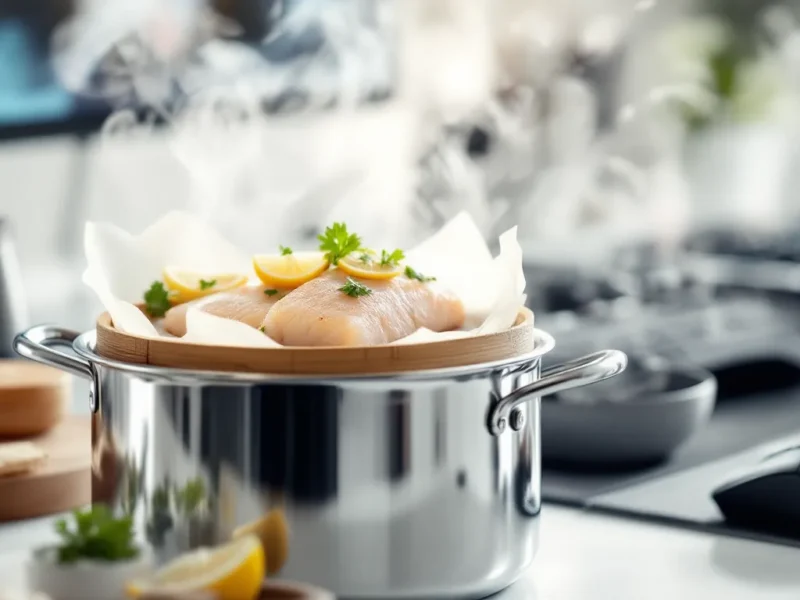
Bamboo steamers (two or more stackable layers) are excellent for steaming broccoli while keeping hands and faces away from hot steam. They also look nice enough to bring to the table.
Fill a wok or wide pot with water and bring to a boil. Set the bamboo steamer on top (the bottom edge should not touch the water). Arrange broccoli on the steamer rack, cover with the bamboo lid, and steam for 4–6 minutes depending on floret size.
Bamboo has natural insulation, so steam stays more uniform throughout the stack. Multiple layers let you steam several portions simultaneously. The downside is cleaning, bamboo is porous and can mold if not dried properly. Wash immediately after use, stand upright to air-dry, and store in a dry place.
They’re also more expensive upfront than a collapsible metal basket, though they last indefinitely with proper care. Gamers appreciate this kind of durability, buy once, use forever.
Serving And Pairing Ideas For Steamed Broccoli
Steamed broccoli is a blank canvas. Here are some easy flavor combinations that work.
Simple sides: Toss with butter and salt, or olive oil and lemon juice. Both take 30 seconds and transform plain broccoli into something restaurant-quality. A sprinkle of garlic powder or nutritional yeast adds depth without calories.
Asian-inspired: Mix soy sauce, sesame oil, and a dash of rice vinegar. Top with sesame seeds and sliced green onions. This version pairs beautifully with rice or noodles.
Cheesy: Grate sharp cheddar or parmesan over hot broccoli and watch it melt slightly. Add a pinch of smoked paprika for complexity.
Hot sauce: Toss with your favorite hot sauce mixed with a bit of butter. This works as a side or mixed into grains.
Garlic and chili: Cook minced garlic in olive oil until golden, then pour over steamed broccoli with red pepper flakes and salt. Simple, impressive, zero filler.
Creamy: Combine Greek yogurt with a squeeze of lemon and minced dill, then use as a dip or dressing for the broccoli. High protein, low calorie.
The key across all of these: the broccoli itself should taste fresh and properly cooked. Season and dress it, that’s where the magic happens. How long does it take to steam broccoli when you’re meal prepping? Same timing as always, 3 to 8 minutes depending on texture. The difference is you’ll be eating it throughout the week, so proper storage matters more than presentation.
Conclusion
Steaming broccoli is straightforward once you understand the variables. The core math is simple: bring water to a boil, add properly-sized florets to a basket, cover, and steam for 3–8 minutes depending on your target texture and floret size. How long to steam broccoli on a stove stays consistent, what changes is your cut sizes and the specific texture you’re after.
The real skill isn’t in the timing: it’s in the prep. Uniform floret sizing eliminates guesswork. A snug-fitting lid and the right water level remove surprises. Checking once at 3 minutes (rather than hovering and lifting the lid repeatedly) keeps cooking times predictable.
Once you’ve nailed your preferred texture on your specific stove and equipment, you’ll hit it reliably every time. Most home cooks find that crisp-tender (4–5 minutes) is the sweet spot, cooked enough to be fully flavored, firm enough to hold up to dressing or sauce without dissolving. From there, minor adjustments account for floret size or elevation. Resources like How-To Geek’s kitchen guides and GameSpot’s detailed how-to content offer additional cooking reference material if you want to dive deeper into technique optimization for other vegetables.
The final piece: dress your broccoli with intention. Steaming preserves nutrients and flavor, a quality fat (olive oil, butter, sesame oil) and a touch of acid (lemon, vinegar) or umami (soy sauce, garlic, cheese) elevates it from side dish to something memorable. Keep your setup consistent, rotate through flavor combinations, and you’ll never get bored with steamed broccoli. It’s the reliable main character of meal prep.

 Phaelorith Vylandore